Why invoices get paid late
When a customer pays late, it is usually for one of four reasons: they did not know when payment was due, they did not know how to pay, they disagreed with something on the invoice, or they simply forgot. Every one of those is something you can reduce with better paperwork and a regular routine.
9 tactics that shorten the wait
- Agree terms before you start. Put the payment schedule on the estimate. See payment terms explained.
- Take a deposit on bigger jobs. It covers early costs and signals commitment. Details in our deposit guide.
- Invoice the same day. A job finished Tuesday and invoiced the following Monday starts its payment clock five days late.
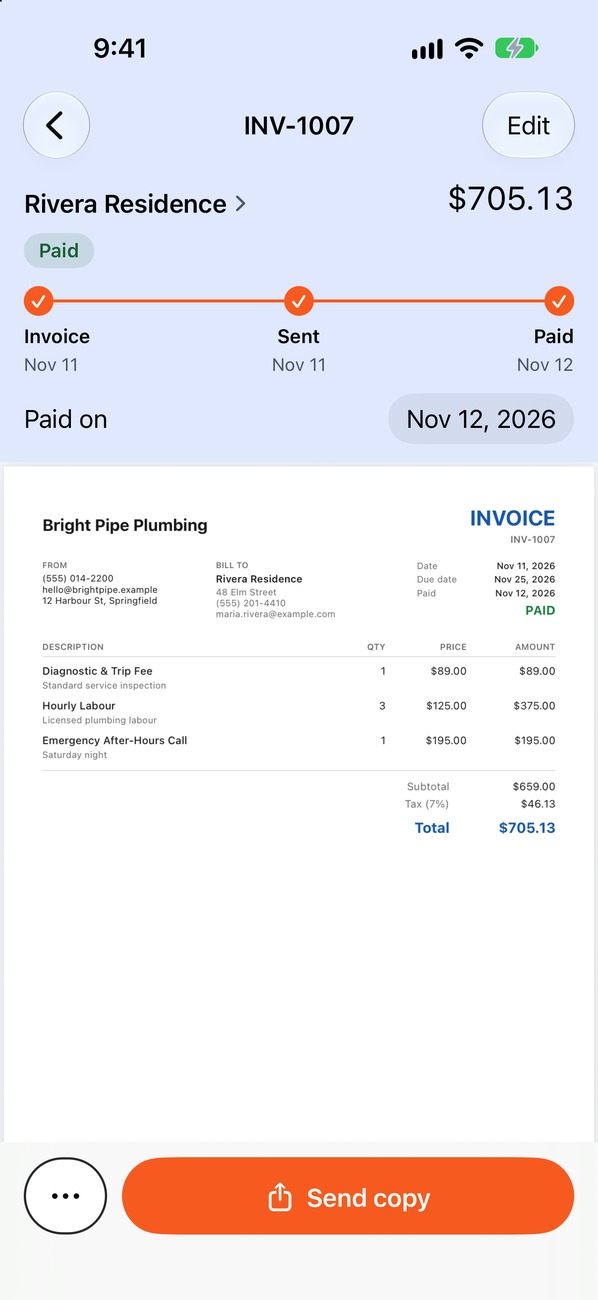
- Make the invoice clear. Itemized, accurate and consistent with the estimate. Use the invoice template as a baseline.
- Put a due date on it. “Please pay by Nov 24” works better than “Net 30” for customers unfamiliar with the term.
- Offer the easy ways to pay. Spell out every method you accept and the exact steps.
- Send it where they will see it. A PDF by text or WhatsApp is often opened faster than an email.
- Remind before and after the due date. A friendly note two days before catches the forgetful. See our reminder templates.
- Know who owes what. Keep every client's open invoices in one place so nothing slips through. Pago Invoice shows each client's history and balance.
A 15-minute weekly routine
Pick the same time each week, such as Friday afternoon, and run through this list.
- Invoice every finished job that has not been billed.
- List invoices due in the next three days and send a friendly nudge.
- List invoices past due and follow up on each one.
- Record payments that came in, so balances are accurate.
- Note any customer who pays late more than once, and tighten their terms next time.
When an invoice goes late
Start polite and get firmer only if you need to. Most overdue invoices are paid after one friendly message. Keep a written record of every reminder, and keep the tone professional even if you are frustrated. If a large amount stays unpaid, check your local rules on next steps, such as formal notices or small-claims options, and consider professional advice.
Remember: sending an invoice does not collect the money by itself. Follow-up is part of the job.
Questions about getting paid
What is a normal payment term for contractors?
It varies by trade and customer. Residential work is often due on completion or within 7 to 15 days, while commercial clients may expect longer terms. Choose what suits your cash flow and state it up front.
How much deposit should I ask for?
A common approach is a percentage tied to materials and scheduling costs. Some places cap deposits, so check local rules before setting a standard.
Is it rude to send a payment reminder?
No. Customers are busy and invoices get buried. A short, friendly reminder is routine business and often gets paid within a day.
Should I stop work if a progress payment is late?
If your agreement ties work stages to payments, say so in writing before you start. Then pausing is a documented consequence, not a surprise.