1. Define the scope before pricing
Write down the work the customer asked for, what you saw on site and any assumptions that affect the price. If you haven't been able to inspect something yet, such as what's behind a wall or under old shingles, say so.
A clear scope lets both of you tell included work apart from possible extra work, which is exactly the conversation you want to avoid having at the end of the job.
2. Make the estimate easy to review
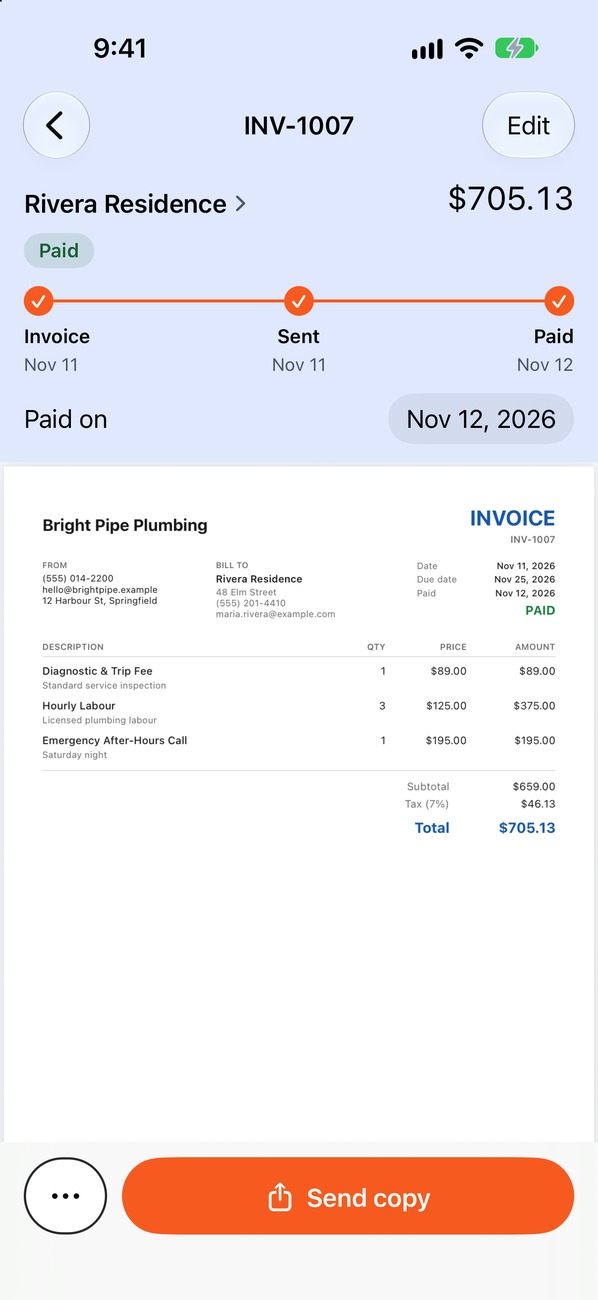
Break the quote into useful line items: service, labor, materials, quantity and rate. Include the tax that applies, any call-out fee and a deposit request if you use one. Add how long the price is valid, or a scheduling note, when it matters for the job.
Keep descriptions specific enough to identify the work but short enough to read on a phone. The total should be easy to find, and the customer's next step (approve, pay a deposit, pick a date) should be obvious.
3. Confirm changes before doing extra work
Jobs change once work begins. If the customer asks for more, or you find a problem that changes the scope, explain the change and its price before carrying on where you can.
Update the estimate or write a short change note the customer agrees to, even by text. Then the final invoice holds no surprises.
4. Build the invoice from the approved work
When the job is done, start from the approved estimate rather than a blank page. Carry over the agreed line items, then adjust only for documented changes or quantities that really differ.
Add the invoice date, due date, payment instructions and anything already received, so the balance is clear at a glance.
5. Close the loop
Send the invoice in a format the customer can open on any phone, such as a PDF. Record deposits and partial payments as they arrive and keep the remaining balance visible.
Keep the final estimate and invoice together with the customer's job history. That record is what you'll want the next time the same customer calls, or if a question about the job comes up months later.
Documentation and tax requirements vary by location and trade, so check what applies to your business before you send a quote or a bill.